
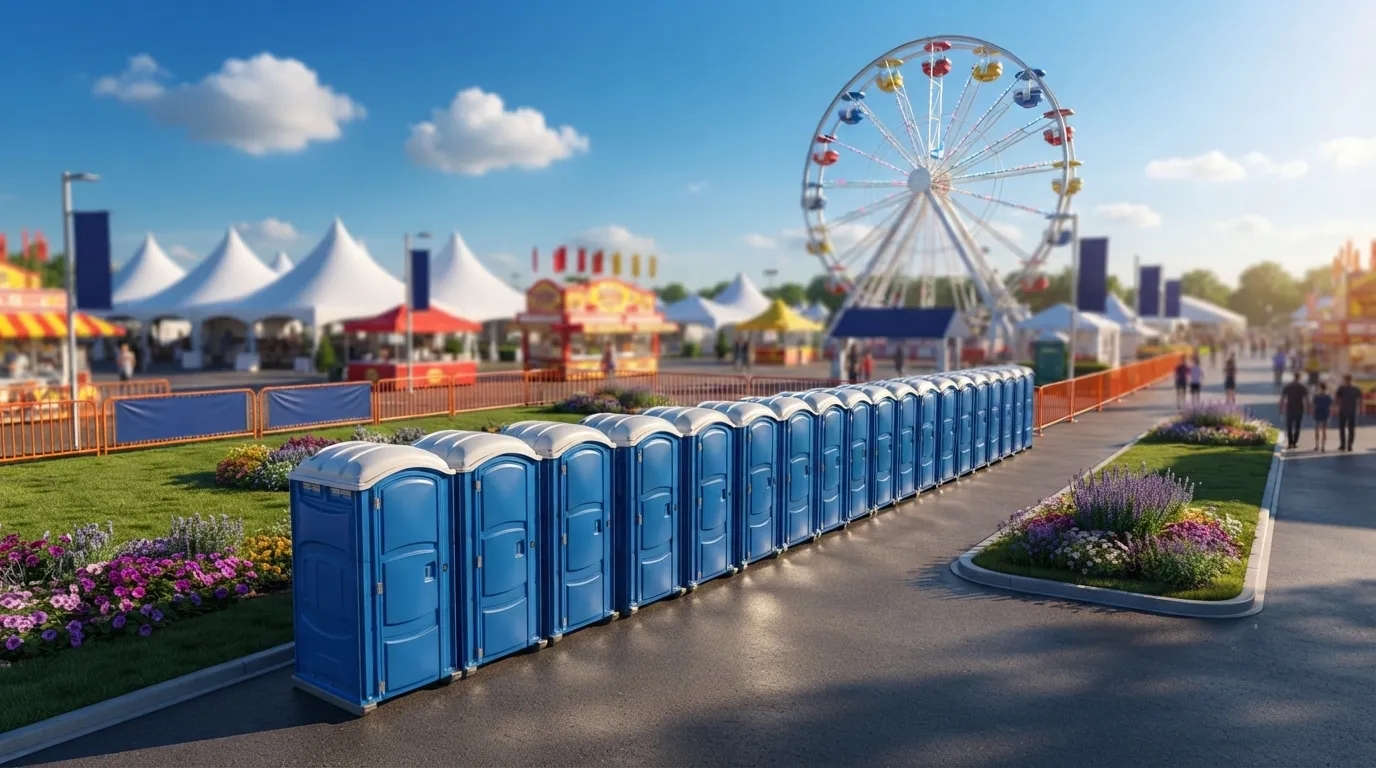
How many restrooms does a county fair actually need?
There is no single number, because a fair with 2,000 people on a Saturday needs a different setup than one running four days with a midway and a beer garden. Start with the OSHA 1926.51(c) ratio for your vendors and crew: one toilet for 20 workers or fewer, then one toilet seat and one urinal per 40 as staff counts climb. Attendee restrooms sit on top of that ratio and depend on foot traffic, not headcount alone. A fair with long dwell time, food vendors and a beer garden pushes more people through fewer stalls over a shorter window, so you want more capacity than a straight math formula suggests. Standard porta potty rental covers general attendee traffic well, and ADA accessible porta potty units need to make up at least 5 percent of any cluster of single-user toilets under ADA Standards 213.2, with never fewer than one. If your event runs several buildings or a spread-out midway near Temecula, look at event restroom rental planning built around walking distance, not just total count. We also stage extra units near stages and food courts, since that is where lines actually form.
Groups asking how many porta potties do I need for a similar event should treat the fair grounds layout as the real driver. A single entrance funnels people into a smaller cluster near the gate; multiple entrances need units spread across the site instead. We plan for both.
Where should restrooms go on the fairgrounds?
Restrooms belong near the heaviest foot traffic, not tucked behind the last row of vendor booths. ADA Standards 403.5.1 requires a 36 inch clear route to every accessible unit, and ADA Standards 405.2 caps ramp slope at 1:12 if the ground isn't flat, both of which matter on grass or gravel fairground surfaces. Our porta potty placement guide walks through sightlines, ground stability under ADA 302.1, and turning space, since ADA 304.3.1 calls for a 60 inch turning circle in front of accessible units. Placement near Temecula fairgrounds also has to account for delivery access: a standard unit runs about 44 by 48 inches on the ground and 92 inches tall, so tight footpaths can still take them, but our trucks need clear staging space to drop and service that many units efficiently. If your fair includes a dumpster for vendor waste, a roll-off dumpster rental needs roughly 60 feet of straight clearance behind the truck, so plan that spot early with your site map, not the week of the event.
Fairs pulling from towns around Temecula should also confirm placement in the public right of way with the city directly. That rule is not something we invent on a page, it is a conversation with Temecula's permitting staff before the trucks roll. For groups planning a fair anywhere from Wildomar, 12.0 miles northwest, to Lake Elsinore, 18.9 miles northwest, that same placement logic applies. We also stage handwashing station rental units near food vendors, since 29 CFR 1910.141(d)(2) requires soap and towels or a hand drying device at washing stations, not sanitizer alone.
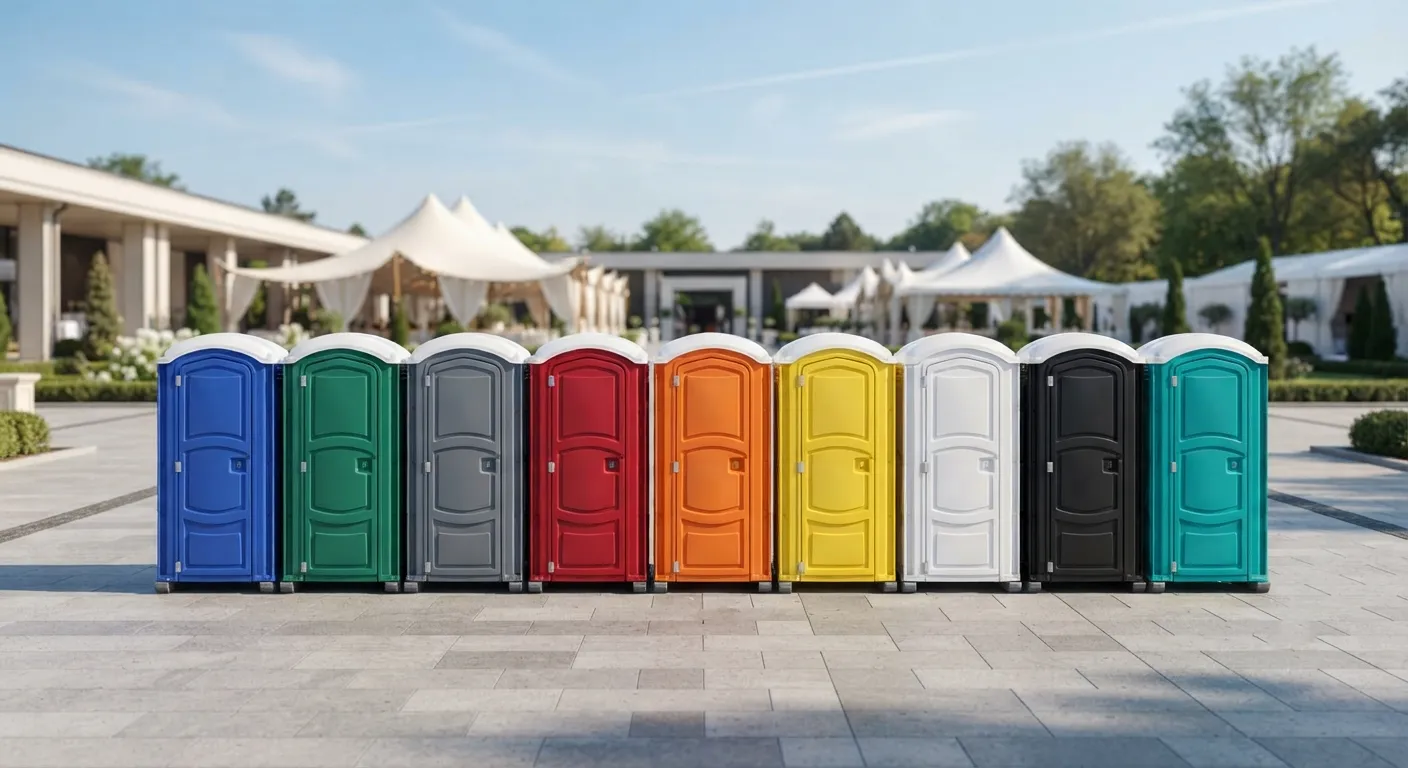
What restroom types work best for a multi-day fair?
Standard units handle the bulk of attendee traffic and cost less per day for a fair spanning multiple days, since our pricing bands show a standard unit typically running $200 to $400 for an event-length rental. Fairs with VIP areas, sponsor tents or a beer garden often add a deluxe flushable porta potty for a nicer experience, or a full restroom trailer rental if the budget allows. A 4 stall restroom trailer moves more people through fewer units per hour than standard toilets, which matters during a rush after the main stage act ends.
| unit | duration | typical price |
|---|---|---|
| standard | event | $400 |
| ada | week | $185 |
| deluxe | week | $250 |
| trailer | event | $3,500 |
Service frequency also matters for a multi-day fair. ANSI/PSAI Z4.3 sets a baseline of one service visit per week for up to 10 users over a 40 hour week, but a fair with thousands of daily visitors needs servicing far more often than that baseline, sometimes multiple times a day during peak hours. Our how often are porta potties cleaned page breaks down how we scale service intervals for high-traffic events like fairs, festivals and concert restroom rental jobs. If your fair includes food trucks using fryers, a grease trap pumping schedule matters too, since interceptors get pumped once fats, oils, grease and solids reach 25 percent of liquid depth.
How far in advance should we book fair restrooms?
Book as soon as your dates are set, ideally months out for a large fair. Multi-day events near Temecula compete for the same trailers and standard units other festivals and weddings need that same weekend, and trailers book out fastest.
Do we need ADA-accessible units at a county fair?
Yes. ADA Standards 213.2 requires at least 5 percent of clustered single-user toilets to be accessible, never fewer than one. A fair with 20 standard units needs at least one ADA unit, usually more depending on total count.
Can Temecula Porta Pros service restrooms mid-event?
Yes, we scale service visits above the ANSI/PSAI Z4.3 baseline for high-traffic days. Multi-day fairs typically get serviced daily or more during peak attendance, timed around lulls in foot traffic near each cluster.
What if we underestimate our restroom count?
Call us. We keep extra standard units and a service truck on standby for fairs near Temecula, and can often add units same-day if lines back up past what your original count anticipated.
How much clearance do delivery trucks need on fairgrounds?
Our trucks need about 60 feet of straight clearance for roll-off drops and similar clearance for trailer placement. Flag tight gates or narrow access roads when you request a quote so we can route the right truck.
Next step
Get a delivery date
Tell us the address, the dates and the headcount. We size the order and confirm the route.